Buy venusmotorproject.eu ?
We are moving the project
venusmotorproject.eu .
Are you interested in purchasing the domain
venusmotorproject.eu ?
domain@kv-gmbh.de · 0541-91531010
Buy venusmotorproject.eu ?
How do you solve compound quantifiers?
Compound quantifiers can be solved by breaking them down into simpler quantifiers and then applying the appropriate rules. For example, if the compound quantifier is "for every x, there exists a y such that...", you can first consider the "for every x" part and then the "there exists a y" part separately. This allows you to apply the rules for universal and existential quantifiers to solve the compound quantifier step by step. By breaking down the compound quantifier into simpler parts and applying the rules systematically, you can effectively solve compound quantifiers. **
How do universal and existential quantifiers describe and negate statements?
Universal quantifiers, denoted by the symbol ∀, are used to make a statement about all elements in a set. For example, the statement "∀x P(x)" means that the predicate P(x) is true for all elements x in the set. To negate a universally quantified statement, we use the symbol ¬ before the quantifier, so the negation of "∀x P(x)" would be "¬∀x P(x)", which is equivalent to "∃x ¬P(x)". On the other hand, existential quantifiers, denoted by the symbol ∃, are used to make a statement about at least one element in a set. For example, the statement "∃x P(x)" means that there exists at least one element x in the set for which the predicate P(x) is true. To negate an existentially quantified statement, we use the symbol ¬ before the quantifier, so the negation of "∃x **


Similar search terms for Quantifiers
Top-Angebote
Products related to Quantifiers:
-
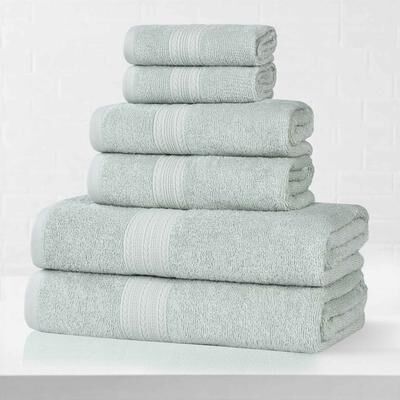
Superior Eco-Friendly Sustainable Cotton 6-Piece Bathroom Towel SetMade with incredibly soft recycled cotton, the Eco-Friendly Sustainable Cotton Bathroom Towel Set is the perfect green addition to any bathroom space. Our sustainable Cotton towels have a lightweight to get you dry quickly after a shower or bath.40,04 $*Shipping: 0,00 $Secure redirect to the provider
-
Superior Eco-Friendly Sustainable Cotton 6-Piece Bathroom Towel SetMade with incredibly soft recycled cotton, the Eco-Friendly Sustainable Cotton Bathroom Towel Set is the perfect green addition to any bathroom space. Our sustainable Cotton towels have a lightweight to get you dry quickly after a shower or bath.38,60 $*Shipping: 0,00 $Secure redirect to the provider
-
Superior Eco-Friendly Sustainable Cotton 6-Piece Bathroom Towel SetMade with incredibly soft recycled cotton, the Eco-Friendly Sustainable Cotton Bathroom Towel Set is the perfect green addition to any bathroom space. Our sustainable Cotton towels have a lightweight to get you dry quickly after a shower or bath.38,71 $*Shipping: 0,00 $Secure redirect to the provider
-
Superior Eco-Friendly Sustainable Cotton 6-Piece Bathroom Towel SetMade with incredibly soft recycled cotton, the Eco-Friendly Sustainable Cotton Bathroom Towel Set is the perfect green addition to any bathroom space. Our sustainable Cotton towels have a lightweight to get you dry quickly after a shower or bath.43,99 $*Shipping: 0,00 $Secure redirect to the provider


-
How can I express the following statement using quantifiers or mathematical symbols?
The statement "All cats are mammals" can be expressed using quantifiers and mathematical symbols as ∀x (Cat(x) → Mammal(x)), where ∀x denotes "for all x", Cat(x) represents "x is a cat", Mammal(x) represents "x is a mammal", and the arrow → denotes "implies". This statement asserts that for every x, if x is a cat, then x is a mammal. **
-
What are the rules for negating mathematical statements using quantifiers and sets?
When negating a mathematical statement with quantifiers and sets, the following rules apply: 1. To negate a statement with a universal quantifier (∀), change it to an existential quantifier (∃) and vice versa. 2. When negating a statement involving sets, use the complement of the set to negate the original statement. 3. When negating a statement involving a logical connective (such as AND, OR), apply De Morgan's laws to distribute the negation over the connectives. **
-
How do you describe and negate universal and existential quantifiers in statements?
Universal quantifiers, denoted by the symbol ∀, are used to make a statement about all elements in a set. For example, the statement "∀x, P(x)" means "For all x, P(x) is true." To negate a universal quantifier, we use the symbol ¬, so the negation of "∀x, P(x)" is "¬(∀x, P(x))," which can be rewritten as "∃x, ¬P(x)," meaning "There exists an x such that P(x) is false." Existential quantifiers, denoted by the symbol ∃, are used to make a statement about the existence of at least one element in a set. For example, the statement "∃x, P(x)" means "There exists an x such that P(x) is true." To negate an existential quantifier, we use the symbol ¬, so the negation of "∃x, P(x)" is **
-
Are electric cars sustainable?
Electric cars are generally considered more sustainable than traditional gasoline-powered vehicles because they produce zero tailpipe emissions, reducing air pollution and greenhouse gas emissions. However, the sustainability of electric cars depends on how the electricity used to charge them is generated. If the electricity comes from renewable sources like wind or solar power, then electric cars can be considered truly sustainable. Additionally, the production and disposal of electric car batteries can have environmental impacts, so advancements in battery technology and recycling processes are important for the overall sustainability of electric vehicles. **


Why don't eco-friendly women shave?
Eco-friendly women may choose not to shave for a variety of reasons related to sustainability and environmental impact. Shaving requires the use of disposable razors, which contribute to plastic waste in landfills. Additionally, the production and transportation of shaving products can have a significant carbon footprint. By opting not to shave, eco-friendly women can reduce their personal contribution to waste and carbon emissions, aligning with their values of environmental conservation. **
What is more sustainable and environmentally friendly: an electric kettle or a stovetop whistling kettle?
An electric kettle is generally more sustainable and environmentally friendly compared to a stovetop whistling kettle. This is because electric kettles are more energy efficient, using less electricity to heat water compared to the stovetop kettle which uses gas or electricity. Additionally, electric kettles have an automatic shut-off feature, which prevents over-boiling and saves energy. Furthermore, electric kettles are often made with materials that are easier to recycle, making them a more sustainable choice. **
Top-Angebote
Products related to Quantifiers:
-
Uplift Essentials Natural Bamboo Eco Friendly Toothbrush 10 Piece Sustainable Family Pack Natural Bamboo Eco Friendly Toothbrush 10 Piece Sustainable Family PackTransition to a greener routine with this Natural Bamboo Toothbrush Set, a premium collection of bamboo products designed to reduce environmental impact without compromising on performance. Each handle is crafted from 100% sustainable bamboo,...37,97 $*Shipping: 0,00 $Secure redirect to the provider
-
Superior Eco-Friendly Sustainable Cotton 6-Piece Bathroom Towel SetMade with incredibly soft recycled cotton, the Eco-Friendly Sustainable Cotton Bathroom Towel Set is the perfect green addition to any bathroom space. Our sustainable Cotton towels have a lightweight to get you dry quickly after a shower or bath.44,99 $*Shipping: 0,00 $Secure redirect to the provider
-
Superior Eco-Friendly Sustainable Cotton 6-Piece Bathroom Towel SetMade with incredibly soft recycled cotton, the Eco-Friendly Sustainable Cotton Bathroom Towel Set is the perfect green addition to any bathroom space. Our sustainable Cotton towels have a lightweight to get you dry quickly after a shower or bath.40,04 $*Shipping: 0,00 $Secure redirect to the provider
-
Superior Eco-Friendly Sustainable Cotton 6-Piece Bathroom Towel SetMade with incredibly soft recycled cotton, the Eco-Friendly Sustainable Cotton Bathroom Towel Set is the perfect green addition to any bathroom space. Our sustainable Cotton towels have a lightweight to get you dry quickly after a shower or bath.38,60 $*Shipping: 0,00 $Secure redirect to the provider
-
How do you solve compound quantifiers?
Compound quantifiers can be solved by breaking them down into simpler quantifiers and then applying the appropriate rules. For example, if the compound quantifier is "for every x, there exists a y such that...", you can first consider the "for every x" part and then the "there exists a y" part separately. This allows you to apply the rules for universal and existential quantifiers to solve the compound quantifier step by step. By breaking down the compound quantifier into simpler parts and applying the rules systematically, you can effectively solve compound quantifiers. **
-
How do universal and existential quantifiers describe and negate statements?
Universal quantifiers, denoted by the symbol ∀, are used to make a statement about all elements in a set. For example, the statement "∀x P(x)" means that the predicate P(x) is true for all elements x in the set. To negate a universally quantified statement, we use the symbol ¬ before the quantifier, so the negation of "∀x P(x)" would be "¬∀x P(x)", which is equivalent to "∃x ¬P(x)". On the other hand, existential quantifiers, denoted by the symbol ∃, are used to make a statement about at least one element in a set. For example, the statement "∃x P(x)" means that there exists at least one element x in the set for which the predicate P(x) is true. To negate an existentially quantified statement, we use the symbol ¬ before the quantifier, so the negation of "∃x **
-
How can I express the following statement using quantifiers or mathematical symbols?
The statement "All cats are mammals" can be expressed using quantifiers and mathematical symbols as ∀x (Cat(x) → Mammal(x)), where ∀x denotes "for all x", Cat(x) represents "x is a cat", Mammal(x) represents "x is a mammal", and the arrow → denotes "implies". This statement asserts that for every x, if x is a cat, then x is a mammal. **
-
What are the rules for negating mathematical statements using quantifiers and sets?
When negating a mathematical statement with quantifiers and sets, the following rules apply: 1. To negate a statement with a universal quantifier (∀), change it to an existential quantifier (∃) and vice versa. 2. When negating a statement involving sets, use the complement of the set to negate the original statement. 3. When negating a statement involving a logical connective (such as AND, OR), apply De Morgan's laws to distribute the negation over the connectives. **
Similar search terms for Quantifiers
-
Superior Eco-Friendly Sustainable Cotton 6-Piece Bathroom Towel SetMade with incredibly soft recycled cotton, the Eco-Friendly Sustainable Cotton Bathroom Towel Set is the perfect green addition to any bathroom space. Our sustainable Cotton towels have a lightweight to get you dry quickly after a shower or bath.38,71 $*Shipping: 0,00 $Secure redirect to the provider
-
Superior Eco-Friendly Sustainable Cotton 6-Piece Bathroom Towel SetMade with incredibly soft recycled cotton, the Eco-Friendly Sustainable Cotton Bathroom Towel Set is the perfect green addition to any bathroom space. Our sustainable Cotton towels have a lightweight to get you dry quickly after a shower or bath.43,99 $*Shipping: 0,00 $Secure redirect to the provider
-
Superior Eco-Friendly Sustainable Cotton 6-Piece Bathroom Towel SetMade with incredibly soft recycled cotton, the Eco-Friendly Sustainable Cotton Bathroom Towel Set is the perfect green addition to any bathroom space. Our sustainable Cotton towels have a lightweight to get you dry quickly after a shower or bath.41,84 $*Shipping: 0,00 $Secure redirect to the provider
-
Superior Eco-Friendly Sustainable Cotton 6-Piece Bathroom Towel SetMade with incredibly soft recycled cotton, the Eco-Friendly Sustainable Cotton Bathroom Towel Set is the perfect green addition to any bathroom space. Our sustainable Cotton towels have a lightweight to get you dry quickly after a shower or bath.43,49 $*Shipping: 0,00 $Secure redirect to the provider
-
How do you describe and negate universal and existential quantifiers in statements?
Universal quantifiers, denoted by the symbol ∀, are used to make a statement about all elements in a set. For example, the statement "∀x, P(x)" means "For all x, P(x) is true." To negate a universal quantifier, we use the symbol ¬, so the negation of "∀x, P(x)" is "¬(∀x, P(x))," which can be rewritten as "∃x, ¬P(x)," meaning "There exists an x such that P(x) is false." Existential quantifiers, denoted by the symbol ∃, are used to make a statement about the existence of at least one element in a set. For example, the statement "∃x, P(x)" means "There exists an x such that P(x) is true." To negate an existential quantifier, we use the symbol ¬, so the negation of "∃x, P(x)" is **
-
Are electric cars sustainable?
Electric cars are generally considered more sustainable than traditional gasoline-powered vehicles because they produce zero tailpipe emissions, reducing air pollution and greenhouse gas emissions. However, the sustainability of electric cars depends on how the electricity used to charge them is generated. If the electricity comes from renewable sources like wind or solar power, then electric cars can be considered truly sustainable. Additionally, the production and disposal of electric car batteries can have environmental impacts, so advancements in battery technology and recycling processes are important for the overall sustainability of electric vehicles. **
-
Why don't eco-friendly women shave?
Eco-friendly women may choose not to shave for a variety of reasons related to sustainability and environmental impact. Shaving requires the use of disposable razors, which contribute to plastic waste in landfills. Additionally, the production and transportation of shaving products can have a significant carbon footprint. By opting not to shave, eco-friendly women can reduce their personal contribution to waste and carbon emissions, aligning with their values of environmental conservation. **
-
What is more sustainable and environmentally friendly: an electric kettle or a stovetop whistling kettle?
An electric kettle is generally more sustainable and environmentally friendly compared to a stovetop whistling kettle. This is because electric kettles are more energy efficient, using less electricity to heat water compared to the stovetop kettle which uses gas or electricity. Additionally, electric kettles have an automatic shut-off feature, which prevents over-boiling and saves energy. Furthermore, electric kettles are often made with materials that are easier to recycle, making them a more sustainable choice. **
* All prices are inclusive of VAT and, if applicable, plus shipping costs. The offer information is based on the details provided by the respective shop and is updated through automated processes. Real-time updates do not occur, so deviations can occur in individual cases. ** Note: Parts of this content were created by AI.